Upcoming Trainings

DAIP has received international recognition for its pioneering efforts to alter public policy to protect victims of domestic abuse and offer rehabilitation opportunities for offenders.

Since 1980, DAIP has offered a series of domestic violence trainings on the internationally accepted Duluth Model. Our trainers are experienced advocates, law enforcement officers, probation officers, prosecutors, judges and women's and men's group leaders who work with the Duluth Model every day. Our trainings are designed to share our experience with participants in a way that helps them create positive change in their own communities.

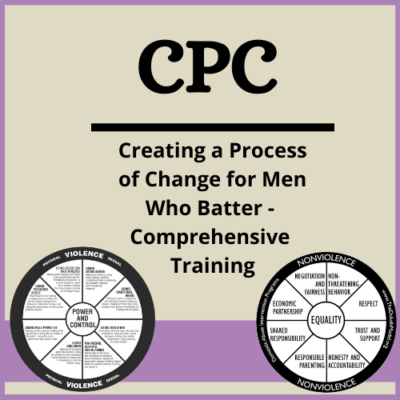
Creating a Process of Change for Men Who Batter - Comprehensive Three-Day Training

NEW! - Creating a Process of Change for Men Who Batter - Comprehensive Three-Day Training, Fathers Focus

Creating a Process of Change for Men Who Batter - Comprehensive Three-Day Training, Christian Focus

Creating a Process of Change for Men Who Batter - Followup Skills Development Seminar


NEW! - Leading Groups for Women Who Use Violence


NEW! - A Coordinated Response to Women Arrested for Using Violence - Distinguishing the Context of Violence in Your Interagency Case Processing

NEW! - Holding Batterers Accountable - Best Practices for Each Agency

NEW! - Keeping Women Safe Post-Separation - An Effective System Response

From the Experts of Duluth's Coordinated Community Response - Practical Ways to Strengthen Your Interagency Response to Domestic Violence Cases

Probation Practices that Enhance Victim Safety in Domestic Assault Cases

Domestic Assault - The Law Enforcement Response 

Domestic Assault - Going Deeper into the Law Enforcement Response 

In Our Best Interest - Working with Battered Women

Customized Trainings 


Creating a Process of Change for Men Who Batter - Comprehensive Three Day Training

This training is the comprehensive training for working with men who batter using the Duluth Model. Many people worldwide claim to be using or teaching the Duluth Model approach, but the Duluth Model is an ever-evolving philosophy and practice based on the work and expertise of our actual work to end battering in Duluth. In this training, participants will be able to learn the latest and most effective components of the model based on our 30 years of experience.
This training is a pre-requisite for use of the official Duluth Model curriculum for working with men who batter. We also encourage all who already use our curriculum, or some adaptation of it, to come and experience the current approach.
The training includes:
  • The theoretical framework for working with men who batter
  •  How to facilitate structured, interactive nonviolence classes using the Duluth Model curriculum
  • The art of dialogue in men's nonviolence classes while avoiding collusion
  • Using control logs, exercises, and videos
  • Using role-plays and teaching non-controlling behaviors
  • How an offender program fits within an interagency community response
Training materials include articles, resources, sample forms, and curriculum supplements. Certificates of completion provided. Completion of this training will entitle participants to purchase the Duluth Model Curriculum Creating a Process of Change for Men Who Batter.
 
This training is approved by the MN Social Work Board for 18 Continuing Education Hours (CEH's).
 
"The Duluth model men’s program is a compelling and well-designed model for intervention with men who batter. The discussions were very informative. I learned what others face in doing batterer intervention work, especially how we can respond more effectively."

Comment from training participant
"Creating a Process of Change for Men Who Batter"

Click here for dates, hotel and logistical information


Creating a Process of Change for Men Who Batter - Followup Skills Development Seminar

This two-day seminar is for facilitators who have attended the three-day Creating a Process of Change for Men Who Batter training within the last ten years, and have been using the curriculum in a class for at least one year. The seminar is highly interactive and helps participants go further in-depth with the skills learned in the Creating a Process of Change for Men Who Batter training. The topics are designed around the needs of the participants, drawing from the following topics:

  • Establishing an authentic dialogue in a men's nonviolence class
  • Identifying and developing themes
  • Finding "teachable moments"
  • The dynamics of co-facilitation
  • More practice logging the Power and Control and Equality wheels
  • Working with men who batter in a compassionate manner without colluding
"The examples of dealing with specific issues in the group setting gave me some great ideas of how I might replicate these ideas in my groups at home.

Comment from training participant
"Creating a Process of Change for Men Who Batter, Followup Skills Development Seminar"

Please contact us at 1-866-417-6111, option 1, for information regarding the next offering of this training.


NEW! - Creating a Process of Change for Men Who Batter - Comprehensive Three Day Training, Fathers Focus

This training reflects our Creating a Process of Change for Men Who Batter - Comprehensive Three Day training but with an added focus on working with men who are fathers. 

This training is for facilitators in batterer intervention programs and parenting skills program coordinators who seek to either start a separate class for fathers or want exercises that address fatherhood to include in standard classes with men who batter. This training will also provide parenting skills coordinators the skills to screen for fathers who batter and to work with them in a format that addresses their role as a co/parallel parent. Many men want to have good relationships with children but if they seek to undo the harm between themselves and their children, they need to examine their use of abusive and manipulative tactics against their children’s mother. This can be easier for men to do when they start their process by examining the impact of their abuse on the children.
 
Participants will learn exercises and strategies to help men become respectful, non-abusive and more supportive of their children, the children’s mother and of the mother-child relationship.

Training materials include: articles, resources, sample forms, and a sample of curriculum exercises. Participants may purchase separately the full curriculum Addressing Fatherhood with Men Who Batter: A Curriculum for Working with Abusive Men as Fathers in a Batterers Intervention Program and/or a companion DVD with four video vignettes and a 911 audio call. Click here for more details on the curriculum. 

Click here for dates, hotel and logistical information.


Creating a Process of Change for Men Who Batter - Comprehensive Three Day Training, Christian Focus

This training reflects our Creating a Process of Change for Men Who Batter - Comprehensive Three Day training but with an added focus on working with Christian men who batter. This training is a collaboration between Changing Men, Changing Lives Ministry, the Domestic Abuse Intervention Project and the Christian faith community. Although the tactics that men who batter use are similar across cultures, the reasons for the tactics can differ. This training takes our Duluth Model Curriculum and grounds it within a Christian cultural focus. The training focuses primarily on how to facilitate men's nonviolence educational classes but also includes guidance on how clergy can partner with domestic violence agencies and support services for women. 

The training is open to batterer intervention program facilitators, women's advocates, clergy and anyone in contact with Christian men struggling with abusive behaviors. Completion of this training will entitle participants to purchase the Duluth Model Curriculum Creating a Process of Change for Men Who Batter along with our Changing Men, Changing Lives supplement text and DVDs.

"This training is needed for all facilitators, educators and clergy. It will provide a guide for better first response and overall intervention.

Comment from training participant
"Creating a Process of Change for Men Who Batter, Christian Focus""
"I better understand the methods and how to implement dialogue and use the teachable moment.

Comment from training participant
"Creating a Process of Change for Men Who Batter, Christian Focus"

Please contact us at 1-866-417-6111, option 1, for information regarding the next offering of this training.


 NEW! - Leading Groups for Women Who Use Violence

Group programs for men that focus on changing thoughts, behaviors and belief systems based on male socialization do not fit the particular circumstance of women’s use of violence. Most women in domestic violence offender groups have been victims of violence themselves and groups must address the unique needs and contextual factors that women experience in relationships and society. And, while women most often use violence in an attempt to assert control over the short-term, it can result in serious long-term consequences, including arrest or loss of custody of their children.
 
This two-day training is designed to assist facilitators in addressing the needs of women who have used violence by drawing on their strengths, providing education and support, and helping them to envision a future that is free of violence.
 
Topics include:
  • The theoretical framework for working with women who have been arrested for using violence and contextual issues for women’s use of violence
  • How to conduct groups with women have used violence
  • Tools, role-plays, and exercises for use in a group setting
Training materials include: articles, resources, sample forms, and a sample of curriculum exercises. The full 12-week curriculum Turning Points: A Nonviolence Curriculum for Women, may be purchased separately.Click here to learn more.

Click here for dates, hotel and logistical information 


NEW! – A Coordinated Response to Women Arrested for Using Violence: Distinguishing the Context of Violence in Your Interagency Case Processing 

Many abusers rely on our collective inability to distinguish among the various types of violence to exploit the very reform efforts put in place to protect battered women and their children. Ensuring that his victim is labeled as an offender is the abuser’s most significant and powerful instrument of self-preservation and protection from community intervention. In such cases our actions become their weapons of post-separation control and punishment.
 
This new two-day training is an opportunity for advocates, CCR coordinators, prosecutors, probation officers, police officers, social workers and counselors to look at the issues that arise when battered women are arrested for domestic violence crimes. This training will help participants from all intervening agencies identify gaps and create a plan for implementing new responses when battered women are arrested.
 
The training will address:
  • Coercive control and battering vs. resistive or coping violence - How battering works to produce resistive violence and the case for treating these domestic violence crimes differently
  • Police - Policy options in cases where victims of battering assault their abusers including self-defense determinations, predominant aggressor determinations and when it's appropriate to arrest a battered woman who has assaulted her abuser
  • Prosecution - Charging and sentencing options for battered women who use resistive violence 
  • Probation - Supervising women on a caseload who use violence within a battering relationship

Please contact us at 1-866-417-6111, option 1, for information regarding the next offering of this training.


NEW! - Holding Batterers Accountable - Best Practices for Each Agency
 
In many communities, victims experience major inconsistencies and injustices because domestic violence offenders are not consistently held accountable for their offenses in a coordinated way as cases are processed through the system. This training will help participants from all intervening agencies identify gaps, consider victim safety, create a plan for implementing new strategies, work through resistance and involve the larger community in holding batterers accountable.
 
Topics include: 
  • 911 – Framing the issue and recordkeeping that leads to prosecution
  • Law enforcement – Reporting, charging levels and enhancements
  • Victim advocacy – Helping women’s voices be heard in determining the system’s success
  • Medical – Collecting evidence and reporting for use in court
  • Jail – Role in keeping victims safe
  • Defense attorneys – Protecting victims who use violence
  • Criminal court – Building cases for prosecution
  •  Judge – Role in sentencing
  • Probation – Assessing risk and making sentencing recommendations
  • Batterer intervention program – Holding men accountable and giving them an opportunity to change
  • Tracking and monitoring – Using data to create system change

 Please contact us at 1-866-417-6111, option 1, for information regarding the next offering of this training.


NEW! - Keeping Women Safe Post-Separation - An Effective System Response
 
This two-day training is for community advocacy agencies, local government agencies, court personnel and judges, attorneys, guardians ad litem, visitation center staff and anyone who interacts with families post separation and wish to learn how to avoid colluding with batterers. Participants will learn how to identify common tactics batterers use to try to maintain control over their families and children when sent to court-ordered visitation and how practitioners can work with visitation center staff to ensure that battered women and children are safe.

Our society often blames women for staying in an abusive situation. The reality is that the most dangerous time for a battered woman and her children is when she leaves her batterer. And, despite all of the encouragement to leave, social services, the courts and even advocacy agencies often do not provide any long term assistance to meet the complex safety and other needs of a battered woman and her children. In order for a battered mother to leave an abusive situation and keep herself and her children safe, she needs a place where visits and exchanges with the batterer can be supervised and documented. However, when batterers are sent to court-ordered visitation and can no longer control the family in the home, they often try to manipulate legal and social service agencies and systems to control events with destructive effects. 
 
Topics include:
  • Ensuring on-going safety for battered women and their children by tying the work of visitation centers to the rest of a coordinated community response
  • Legal issues that arise when batterers continue their abuse by bringing the battle to the courtroom
  • Working with fathers who batter to shift their focus off of controlling her to parenting their children
  • Creating agency protocols and policies that support safety for victims and accountability for offenders
  • Developing effective community partnerships and referrals


Please contact us at 1-866-417-6111, option 1, for information regarding the next offering of this training. 


From the Experts of Duluth's Coordinated Community Response - Practical Ways to Strengthen Your Interagency Response to Domestic Violence Cases 

Can't get buy-in from some agencies?
Do complex problems stop your CCR in its tracks?
Are systemic problems going unsolved?
Are victim safety and power differentials between batterers and victims addressed as well as they could be?

An effective Coordinated Community Response (CCR) is much more than a monthly meeting. An effective CCR enables practitioners and advocates to analyze problems and to implement meaningful changes in how things are done. This three-day training is valuable for law enforcement, advocates, probation officers, judges, prosecutors, social workers, counselors, and organizers who want to enhance the effectiveness of their CCR.

The training will help you:

  • Assess your community's current response
  • Build consensus to reform system response
  • Keep practitioners and community activists working together positively to resolve difficult problems
  • Evaluate reform efforts and make adjustments based on data

Topics include: 

  • The basic activities of a CCR team
  • Interagency policy development that focuses on victim safety 
  • Building working relationships with practitioners in the CCR 
  • Assessing danger and risk of offenders 
  • Building a common philosophical framework around domestic violence
  • Networking and information sharing
  • Using a database to track offenders through law enforcement and court systems
  • Lessons from the St. Paul Blueprint 

Participants will meet with their counterparts in the criminal and civil justice systems, and there will be opportunities for police ride-alongs and observation of men's nonviolence classes.

"The visits by law enforcement, prosecutor, and probation were very helpful in illustrating a CCR. Each segment of the training built on the work of the first day.

Comment from training participant
"Coordinated Community Response to Domestic Violence"

Please contact us at 1-866-417-6111, option 1, for information regarding the next offering of this training. 


Probation Practices that Enhance Victim Safety in Domestic Assault Cases

Probation officers often lack information and specialized training to respond appropriately to batterers and their victims. Fragmented systems, large case loads and poor information exchange can mean probation officers are not well situated to make recommendations to judges, manage offenders or reduce re-offending.

In this two-and-half-day training participants will learn strategies for an effective probation response to domestic assault cases. Through careful collection of accurate information, probation officers can avoid collusion with batterers, build working relationships with partner agencies, respond effectively to battered women and their advocates, and assess and manage offenders on community sentences. This training is designed for probation officers, but it is also for those who work alongside them in partner agencies such as advocacy and batterer programs. Participants will gain from a detailed exploration of the roles of probation in a coordinated community response to domestic violence.

Training materials provided include the sentencing recommendation matrix booklet, accompanying tools and forms, and specific resources that guide risk assessment, track offenders, and enhance collaboration with related agencies.

"My skills were greatly enhanced by this training.

Comment from training participant
"Domestic Assault – The Probation Response"
"I really enjoyed having input from other officers of several different states. This gives us a great opportunity to spark new ideas for our department.

Comment from training participant
"Domestic Assault – The Probation Response"

Please contact us at 1-866-417-6111, option 1, for information regarding the next offering of this training.


Domestic Assault - The Law Enforcement Response

This two-and-a half-day training is designed to increase officers' skills in handling one of the most common and most complicated calls in police work - the domestic assault call. The relationship between the offender and victim and the highly volatile nature of these cases can make police investigation very frustrating. This training focuses on the problems law enforcement officers face and provides useful strategies and techniques. Participants are encouraged to step back to explore policy development and strategies that communities can use to improve collaboration between law enforcement and related agencies. It is designed for law enforcement officers and trainers, shelter directors and advocates, and others who are working with law enforcement within a coordinated community response. Topics include:
  • The changing role of law enforcement
  • The dynamics of an abusive relationship
  • Developing effective policy and building law enforcement into a coordinated community response to domestic violence
  • Interviewing the victim, suspect, and children
  • Establishing probable cause
  • Determining self-defense and predominant aggressor
  • Writing effective reports
  • Investigating strangulation, harassment, and stalking cases.

This course has been approved by the Minnesota POST Board for 14 continuing education credits.

"Being a domestic violence specialist, and handling such a large number of domestic complaints, I became complacent in my investigation technique. But, after your training I look forward to getting back to work to implement some of the techniques I have learned and to share them with my department. I feel refreshed and have a new perspective on the victim’s state of mind.

Comment from training participant
"Domestic Assault – The Law Enforcement Response"
"The training was wonderful--expertise, understanding, sense of collaboration and vision--fabulous.

Comment from training participant
"Domestic Assault – The Law Enforcement Response"
"It is important--getting this information from someone who has hands-on experience.

Comment from training participant
"Domestic Assault – The Law Enforcement Response"

 Please contact us at 1-866-417-6111, option 1, for information regarding the next offering of this training.   


Domestic Assault - Going Deeper into the Law Enforcement Response

This two-day training is designed to provide participants the tools they need to create change in their communities and organizations. As many communities implement domestic abuse response teams, the need for solid investigation techniques from first responders has never been more important. A coordinated community response is an organized team effort. This training is designed to create a team approach where initially responding officers complete their investigation to meet the needs of not only law enforcement, but the needs of essential response team members as well. Command staff, field-based staff, probation and advocates are encouraged to come as teams.
 
Topics include:
  • Advanced probation assessments
  • Advanced investigation techniques
  • The latest in responding to strangulation and stalking
  • Techniques to help change team mindsets and prepare new team members in a conviction-oriented response
  • System advocacy responses
  • Domestic abuse response teams

Please contact us at 1-866-417-6111, option 1, for information regarding the next offering of this training.  


In Our Best Interest - Working with Battered Women

A two-day training for battered women, advocates, women's group facilitators, and community activists on the Duluth curriculum In Our Best Interest. Participants will learn how to use an educational model for facilitating groups for women who have been battered. The teaching method examines personal, institutional, and cultural action to end violence against women. Discussions include how racism, sexism, homophobia, and classism contribute to violence against women. Participants come away from this training with new energy for their work. It is open to women only. This two-day training immerses participants in a process that includes role-plays, exercises, skits, discussions, and presentations about the In Our Best Interest curriculum philosophy. Topics include:

  • Exploring what it means to be an advocate and a teacher
  • Designing a liberating group process
  • Using education as a process for change
  • Relating sexism to other forms of oppression
  • Examining personal power vs. "power over"
  • Moving from education to action.

>Training materials include: sample forms, curriculum supplements, and other handouts. Additional curriculum materials may be ordered. The In Our Best Interest curriculum package includes the manual, three videos/DVDs, and posters of the Power & Control and Equality Wheels.
 

"I feel like I have the tools to really challenge the idea of violence against women.

Comment from training participant
"In Our Best Interest"
"I have a newly ignited enthusiasm and renewed commitment to working toward ending socially supported violence against women.

Comment from training participant
"In Our Best Interest"

Click here for dates, hotel and logistical information 


Customized Trainings

Our trainers are available for customlized trainings in your community on any of the above topics, or issues most relevant to your community. Local trainings can be a great way to generate energy and change in your local area, as well as save money for your participants.

Please call us at 1-866-417-6111, option 1, for more information about costs and arrangements.